Virtual Reality's Emerging Role in Remote Finnish Gaming Communities
Theo Powell · Oct 24, 2026
Virtual Reality's Emerging Role in Remote Finnish Gaming Communities
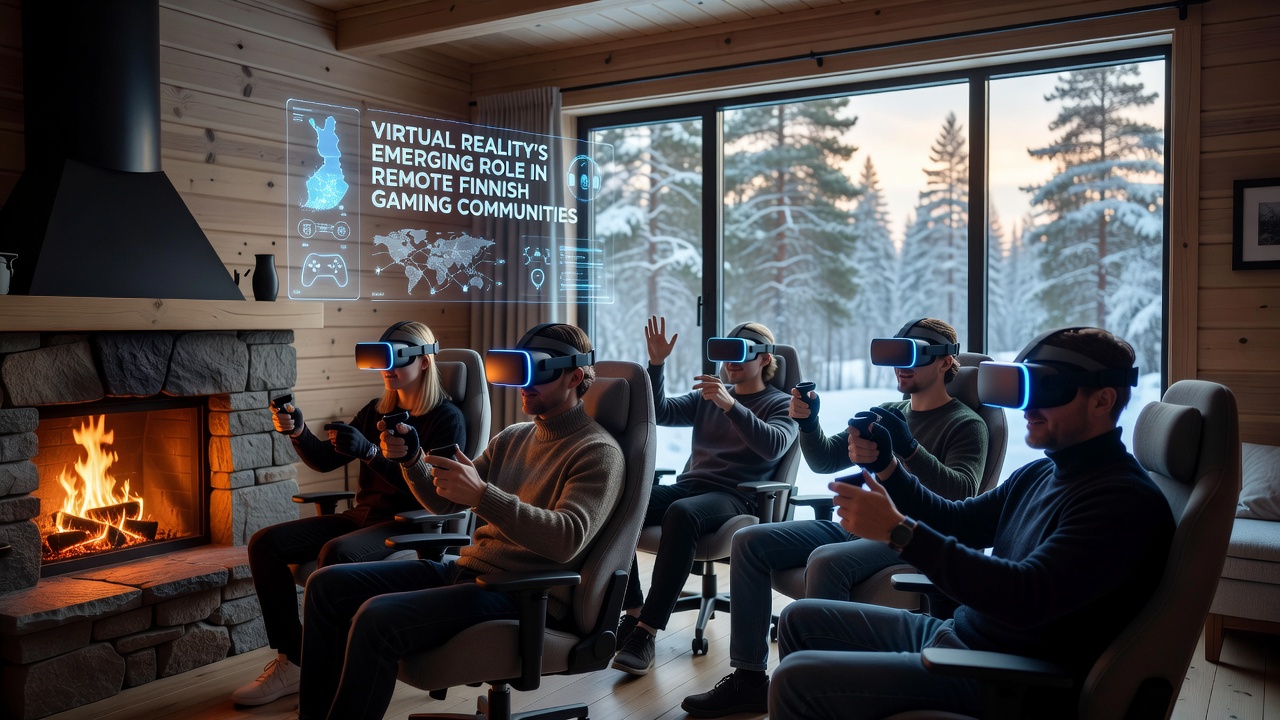
Remote Finnish gaming communities have integrated virtual reality technology at a steady pace since the mid-2020s, with participants using headsets and motion controllers to join shared digital spaces from homes scattered across the country. Data from national technology surveys shows that Finland recorded one of the higher per-capita VR headset adoption rates in northern Europe by the start of 2026, driven largely by existing high-speed broadband coverage in rural and urban areas alike. Players gather in multiplayer environments that support cross-platform access, allowing individuals without physical proximity to coordinate in real time through avatars that mirror hand gestures and spatial movement.
Technology Infrastructure Supporting VR Adoption
Finnish telecommunications providers expanded fiber-optic networks throughout the 2020s, creating conditions where latency-sensitive VR applications could operate without major interruptions for most households. Government statistics released in early 2026 indicated that over 85 percent of households in Lapland and other remote regions maintained connections capable of sustaining 100-megabit speeds or higher, a threshold that supports stable VR streaming. Hardware manufacturers released lighter headsets with improved battery life during the same period, reducing physical strain during extended sessions that often last several hours. Observers note that these technical improvements coincided with software updates from major game engines, which added native support for Finnish language interfaces and regional server clusters hosted in Helsinki and Tampere.
Community Formation and Social Dynamics
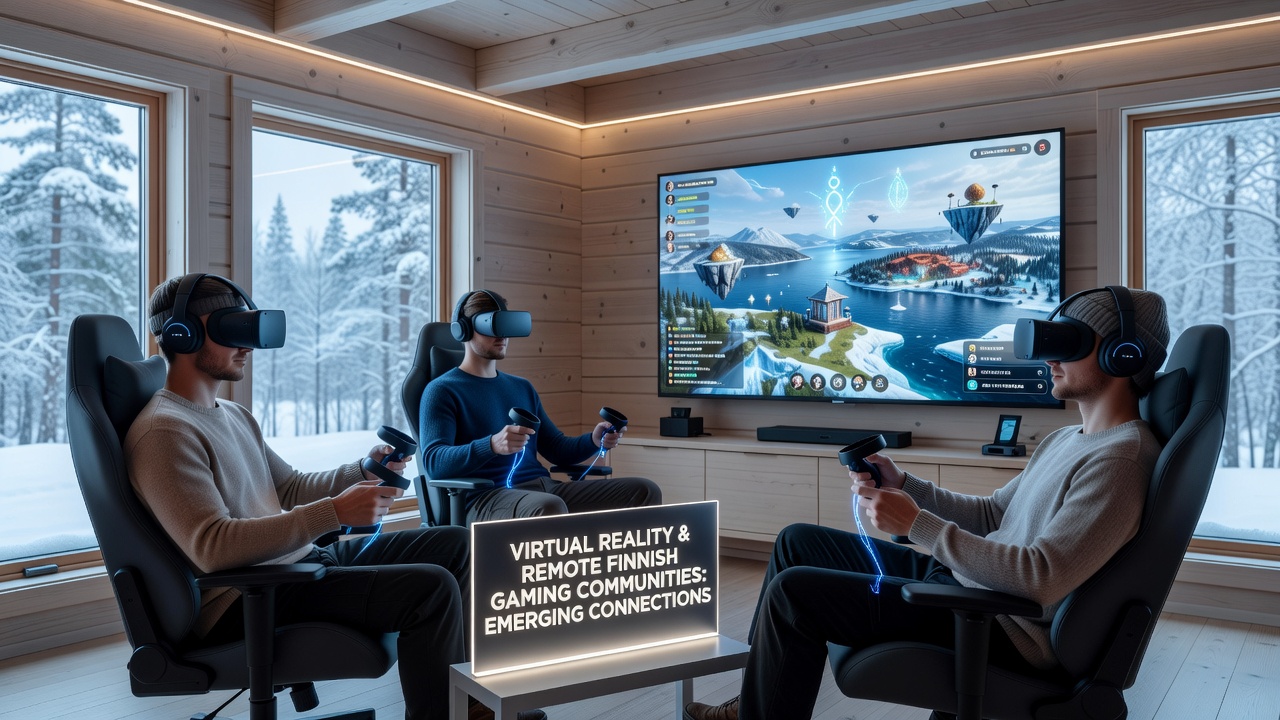
Remote groups formed around specific titles such as social sandbox games and cooperative adventure experiences that emphasize collaborative building and exploration. Participants organize weekly events through Discord servers and dedicated forums, scheduling sessions that accommodate time zones across Finland's long geography. One study from Aalto University tracked participation patterns and found that VR sessions increased average interaction time by 40 percent compared with traditional screen-based multiplayer formats, because spatial audio and gesture controls encouraged more natural conversation flows. Members report that shared virtual environments help offset geographic isolation, especially during winter months when travel becomes difficult. European Commission digital inclusion reports highlight similar trends across Nordic countries, where VR tools have supplemented existing online communities rather than replacing them.
Game Titles and Platform Choices
Communities gravitate toward titles that offer persistent worlds and user-generated content tools, allowing Finnish players to create custom maps that incorporate local landmarks or seasonal themes. Popular platforms include cross-compatible systems that run on both standalone headsets and PC-tethered devices, giving users flexibility based on their available hardware. As of October 2026, several Finnish developer collectives released small-scale VR experiences focused on cultural storytelling, such as recreations of traditional festivals rendered in three dimensions. These projects often receive funding through public innovation grants aimed at preserving digital heritage, and they attract international players who join Finnish-hosted servers to experience the environments firsthand.
Challenges Encountered by Participants
Hardware costs remain a barrier for some potential members, even though prices dropped throughout 2025 and 2026. Researchers at the University of Helsinki documented that lower-income households in smaller municipalities participated at roughly half the rate of urban counterparts with higher disposable incomes. Motion sickness affects a subset of users during longer play periods, prompting developers to implement adjustable comfort settings and gradual acclimation tutorials. Bandwidth caps imposed by certain rural providers occasionally interrupt sessions, forcing organizers to maintain backup text-based communication channels for coordination when visual links drop. Community guidelines have emerged to address accessibility, including color-blind modes and subtitle options that support the Finnish language alongside English.
Research and Educational Applications
Academic institutions have begun incorporating remote VR gaming communities into studies on digital socialization and spatial cognition. Projects running through October 2026 examine how repeated exposure to collaborative virtual tasks influences problem-solving skills among adult participants. Data collected from voluntary surveys shows measurable improvements in spatial reasoning scores after three months of regular participation, though researchers caution that sample sizes remain limited. Industry organizations such as the International Game Developers Association have cited these Finnish cases in broader reports on regional VR ecosystems, noting the country's combination of strong technical education and widespread English proficiency as enabling factors for international collaboration.
Conclusion
Remote Finnish gaming communities continue to refine their use of virtual reality through iterative hardware upgrades, localized content creation, and structured social events that accommodate geographic spread. Available infrastructure and ongoing research provide measurable indicators of sustained activity, while persistent challenges around cost and accessibility shape participation patterns. The developments tracked through October 2026 reflect a broader pattern of VR integration into everyday digital leisure across northern Europe, supported by existing network capacity and community-driven organization.